Quick answer
Top dressing is a thin layer, about a quarter inch, of compost, sand, or screened topsoil spread over the grass and worked down to the soil surface. It smooths out small bumps a little at a time, helps thatch break down, and feeds sandy soil. The grass blades should still poke through when you finish. If they do not, it went on too thick.
What a thin layer actually does
- Levels low spots gradually, a little with each pass, instead of digging the whole yard up at once
- Helps thatch break down instead of building into a spongy mat
- Compost adds life and holding power to soil that is mostly sand
- Pairs naturally with aeration, since the material falls right into the holes
It is slow work by design. A quarter inch at a time feels like nothing, and three passes later the mower stops bouncing.
Sand, compost, or topsoil on Charleston soil
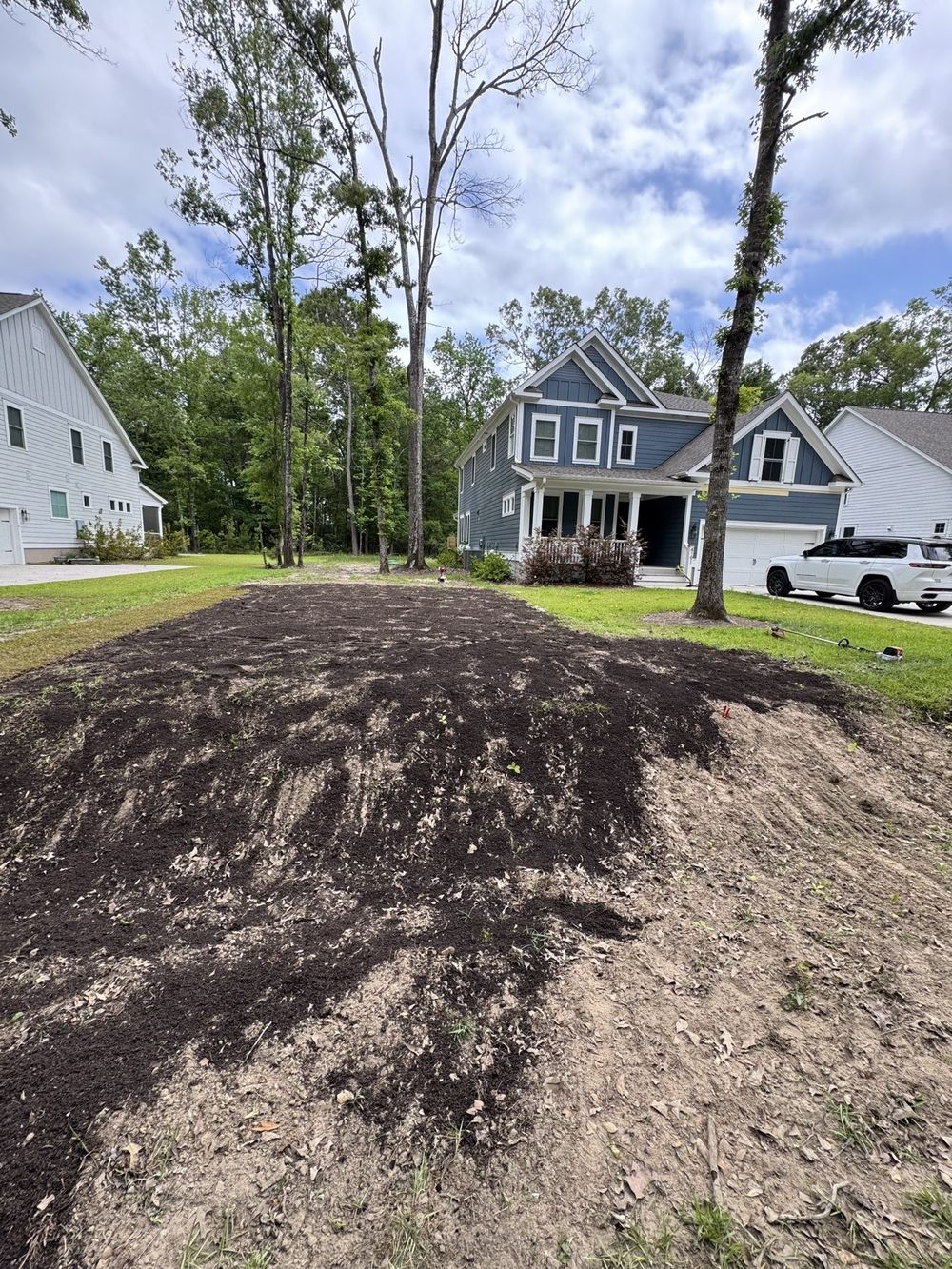
This is where local soil changes the answer. Sand levels the best, and golf courses love it, but most Charleston yards are already sand. Adding more sand to sand levels the yard and does nothing for it. Compost is usually the better buy here: it helps sandy soil hold water through a July dry spell and gives the grass something to eat. Screened topsoil sits in the middle, and it is what we spread under new sod. One warning: never spread sand over clay. It makes a layer that roots and water both hate.
When to do it, and how thick
Time it for active growth: late spring, after the lawn has fully greened up and you have had to mow a couple of times, through the summer. August is about the latest we would start, so the grass has time to grow through the layer before fall. A quarter inch is the standard pass, up to half an inch in a low spot you are filling. As a rough guide, one cubic yard covers about 1,000 square feet at a quarter inch. Water it in when you finish so the material settles down to the soil where it belongs.
How it fits our work
Screened topsoil is already part of our sod work. When we install a new lawn, homeowners can add it at $50 a yard right on our quote page, spread under the sod to give roots a better start. If your existing lawn is bumpy or your soil is tired sand, a top dressing pass is a natural project to talk through while we are already on your property.
A smoother, healthier lawn starts with what is under the grass. For the regular care on top of it, our lawn maintenance service keeps your yard cut and clean on a set schedule.
Thinking about smoothing out your yard?
Call or text us at (843) 640-1336 for a free quote.