Quick answer
Mulch holds moisture better, stays in place through heavy rain, and keeps its look longer, so we use it in most front beds and around shrubs. Pine straw costs less, goes down fast, and knits together on slopes, so it suits big beds, side areas, and anywhere under pine trees. Pick by the bed, not by the yard.
Where mulch wins
- Flat beds near the house, the ones you see every day
- Around shrubs and small plantings that need steady moisture
- Beds that catch roof runoff: mulch is heavier and less likely to float off
- When you want the longest time between refreshes
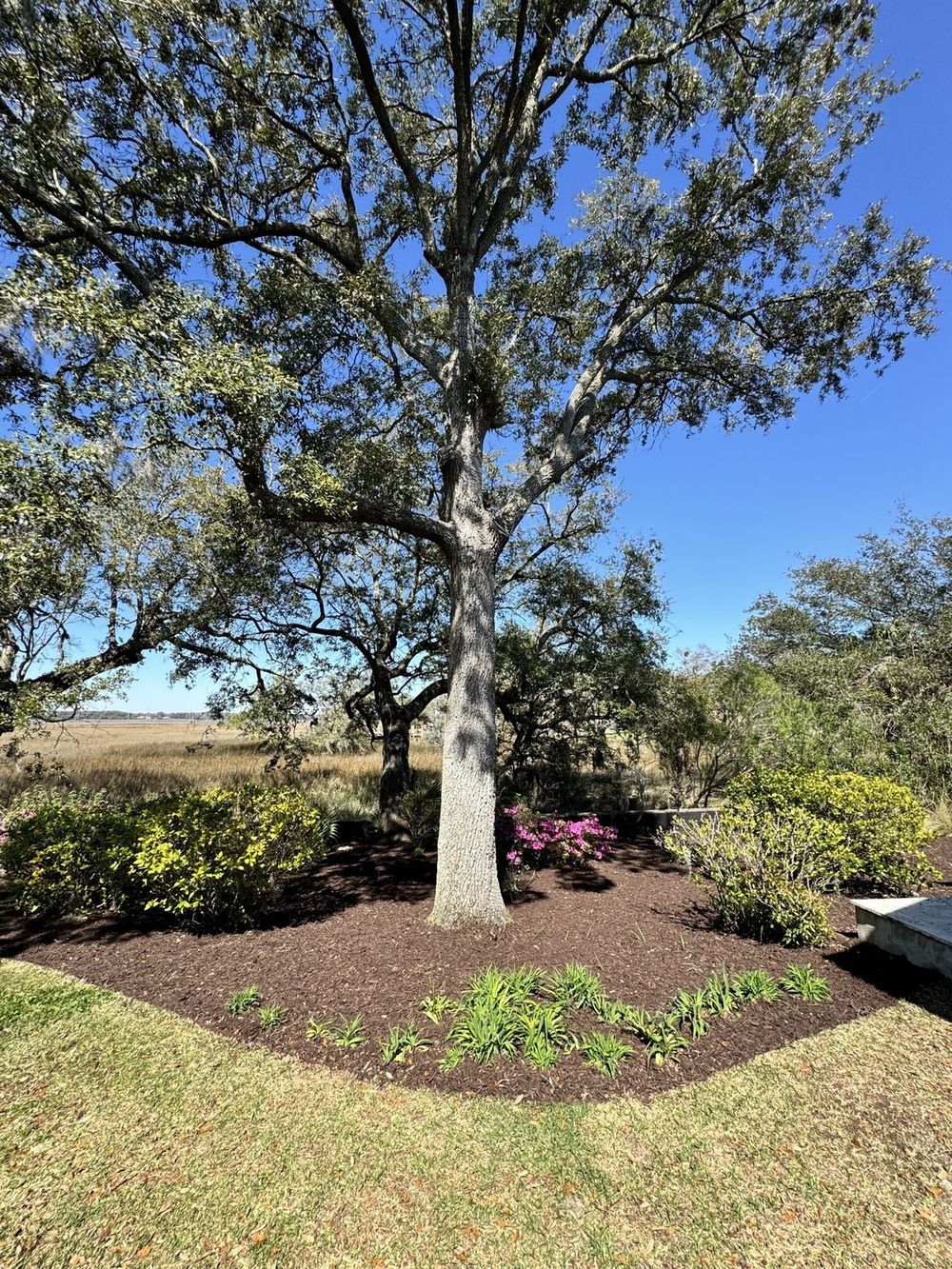
Where pine straw wins
- Slopes and banks: the needles lock together and resist washing
- Large beds, where covering the same ground in mulch gets expensive
- Under pine trees, where fresh needles fall anyway
- Natural, wooded areas at the back of a property
The acid question
People ask if pine straw will sour their soil and hurt their plants. In practice, no. Fresh needles test a little acidic, but by the time they break down in a bed, the effect on the soil is tiny. Azaleas, camellias, and gardenias grow fine under either one, and we have pulled plenty of both out of healthy beds.
What each costs and how long it lasts
On our quote page, mulch installed is $180 per yard and pine straw installed is $22 per bale. A yard of mulch covers about 108 square feet at 3 inches deep. A bale of pine straw covers about 40 to 50 square feet, tucked in. Mulch holds its color through most of a year before it wants a refresh. Pine straw fades and thins faster, so most yards refresh it once or twice a year.
One caution: dry pine straw catches fire easily. Keep it clear of grills, fire pits, and dryer vents, whichever material you choose for the rest of the yard.
Ready to price your beds? See our Mulch & Pine Straw Installation page, or run your measurements on the quote page and see the number right away.
Beds looking tired?
Call or text us at (843) 640-1336 for a free quote.