Quick answer
Gently, and less than you think. Only fronds that are fully yellow or brown come off, cut close to the trunk. Anything with green left in it is still feeding the plant, so it stays. The center crown never gets cut, ever. And because every part of a sago is poisonous to dogs, a proper trim always ends with every cutting and fallen seed picked up and hauled away.
The rules we follow
- Fully brown or fully yellow fronds only, cut clean and close to the trunk
- Green stays, even when a frond looks a little tired
- Never cut the crown or the new spear standing in the center
- Gloves and long sleeves every time, because the fronds are stiff, sharp, and unforgiving
- Every cutting gets cleaned up, since seeds and fronds are toxic to dogs
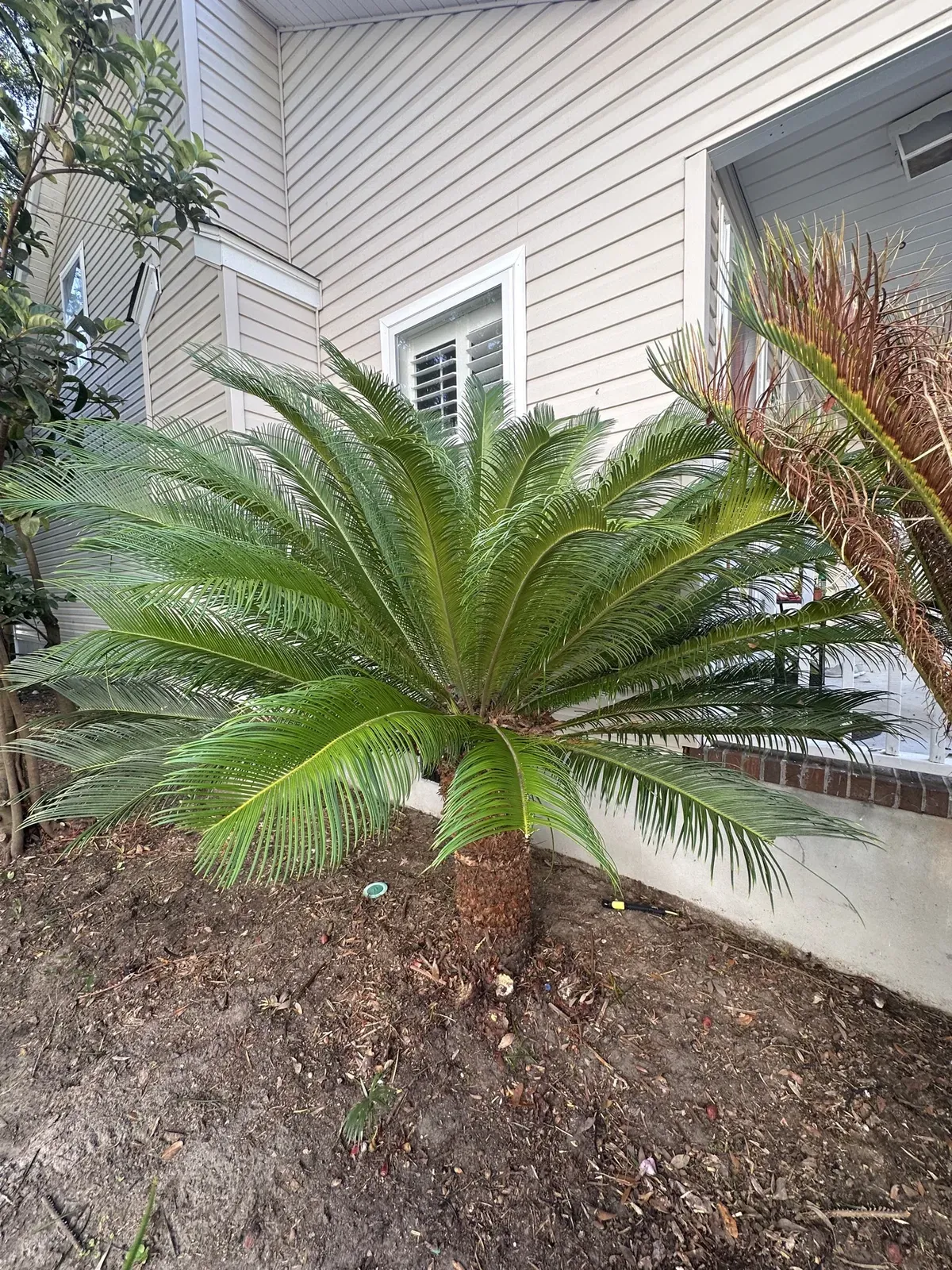
The sago in our photo shows the plant at its best: a fresh ring of new fronds standing up in the middle, last year’s ring still green below it. Next to it, its neighbor is carrying the brown fronds that are ready to come off.
Timing around the flush
Sagos push their new ring of fronds in spring, all at once, like a green fountain. The best cleanup happens right after those new fronds open and harden, when you can see plainly what winter killed and what is still working. A Charleston cold snap will brown fronds that look dead in February, so wait until the frost danger has passed before judging. Two things that are not trimming problems: the lowest ring yellowing is often just age, and new fronds that come out twisted and yellow are usually a manganese shortage, a feeding issue, not a cutting one.
The pups at the base
Those baby sagos sprouting around the trunk are called pups. Leave them and the plant becomes a wide, multi-stemmed cluster, which plenty of people love. Take them off carefully in spring and you get the clean single trunk look, plus a pup you can pot up and grow. Extension guidance says neither choice harms the mother plant. It is a look decision, not a health one.
One warning for dog owners
Every part of a sago is poisonous, and the seeds are the worst part. Dogs are the usual victims, and it does not take much. If a female sago in your yard forms its orange cone of seeds, that cone should come off and the fallen seeds should be picked up before a dog finds them. This is half the reason sago cleanup matters on the properties we service: the trimming is cosmetic, but the cleanup is safety.
Sago cleanup is part of the detail trimming in our lawn maintenance service. Send us a photo of yours and we will tell you what should come off and what should stay.
Sagos looking rough around the edges?
Call or text us at (843) 640-1336 for a free quote.